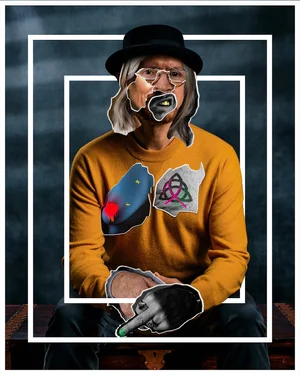
Richard Prince, Instagram Portraits, and the Limits of Authenticity
Postmodernism in art marked a break from modernism's confidence in progress. It replaced that confidence with criticism, skepticism, and irony. The movement rejected the idea of universal truths and put individual experience and interpretation ahead of abstract principles (Tate). It covered a wide range of styles under an "everything goes" attitude, and appropriation became one of its defining tools.

Jeff Koons; Three Ball Total Equilibrium Tank (Two Dr J Silver Series, Spalding NBA Tip-Off) (1985), Tate.
The movement had me curious and so I decided to see what I could discover. Perhaps it would inspire something. As I explored the movement, I kept coming back to questions of communication and meaning. Richard Prince's work is where those questions landed hardest, and it’s a sharp contrast to the soft focus of pictorialism or the formalist discipline of photographers like Ansel Adams.
Prince's work is raw, unpolished, and confrontational. His Portraits series is appropriation taken to its most literal endpoint: he doesn't just borrow a style, he borrows the actual image. The series consists of large inkjet prints on canvas, some as big as 79 by 49 inches, made from curated Instagram images. The concept traces back to how Prince worked in the 1980s: people would ask him for a portrait, and he'd have them bring five photos of themselves they already loved and owned. He'd pick his favorite, photograph it, and hand back a "new" photograph he knew they'd love (Prince). It sounds like a shortcut. But it does something specific: it challenges the idea of authenticity, and it puts the question back on the viewer. If the subject is happy with the result, who gets to say it isn't real?
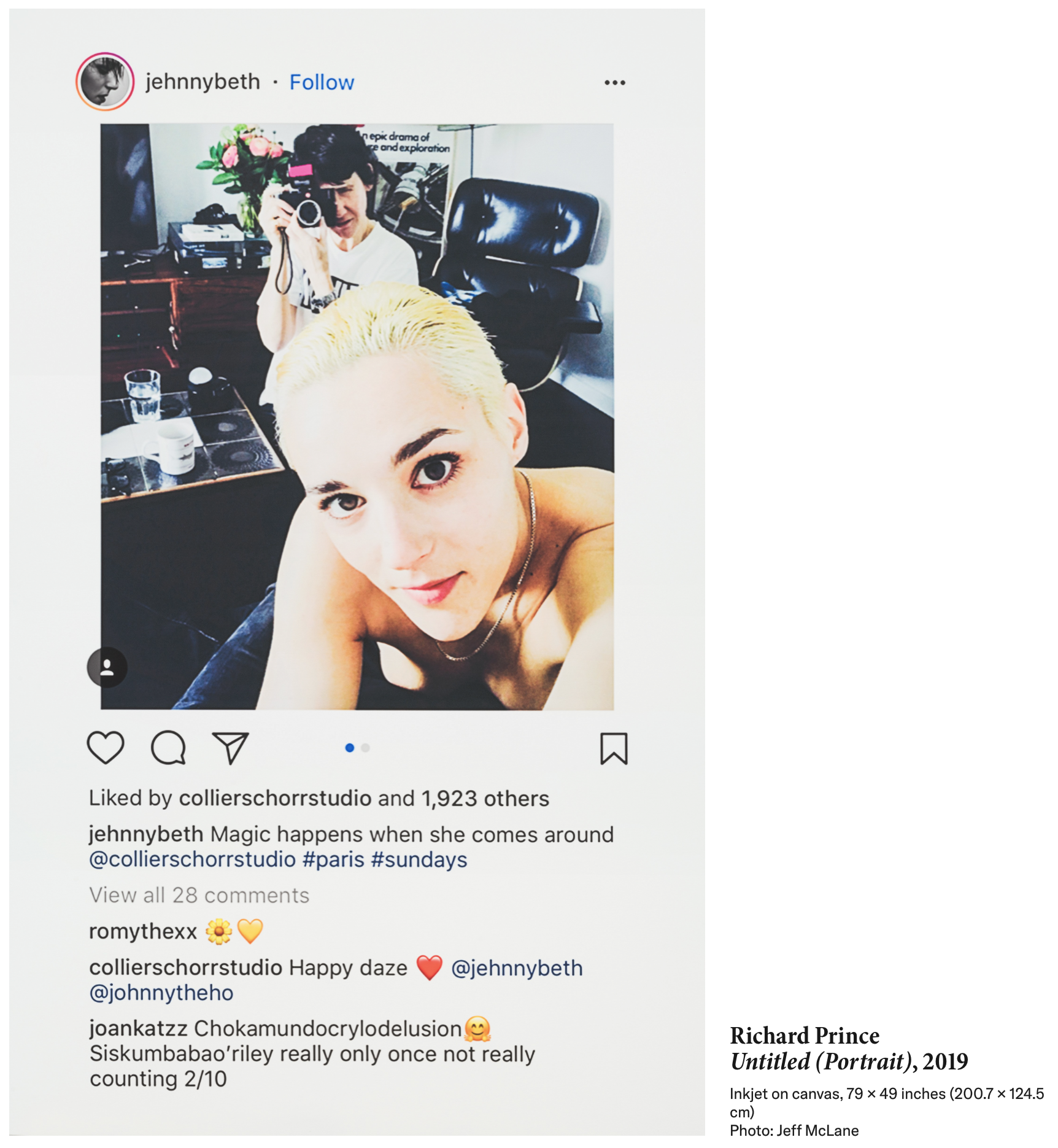
Untitled (Portrait), 2019, from that series, frames a single Instagram post against an off-white canvas; nothing else. The like, comment, and share icons are all visible, close enough that a viewer could imagine reaching out and tapping them. The photo itself is bright and casual: a selfie of a model with someone holding a camera in the background, both seated in what looks like an Eames lounge chair. It reads as a behind-the-scenes moment, the kind social media users are trained to recognize instantly. Prince includes part of the comments section too, which gives the piece a sense of activity and personality.
The scale is the argument. Blowing a phone-sized post up to nearly life-size forces a viewer to confront how much attention we give these images without noticing. The emojis, hashtags, and tags aren't decoration here. They're a second layer of communication, one that runs parallel to the photograph itself and that most of us read without thinking.
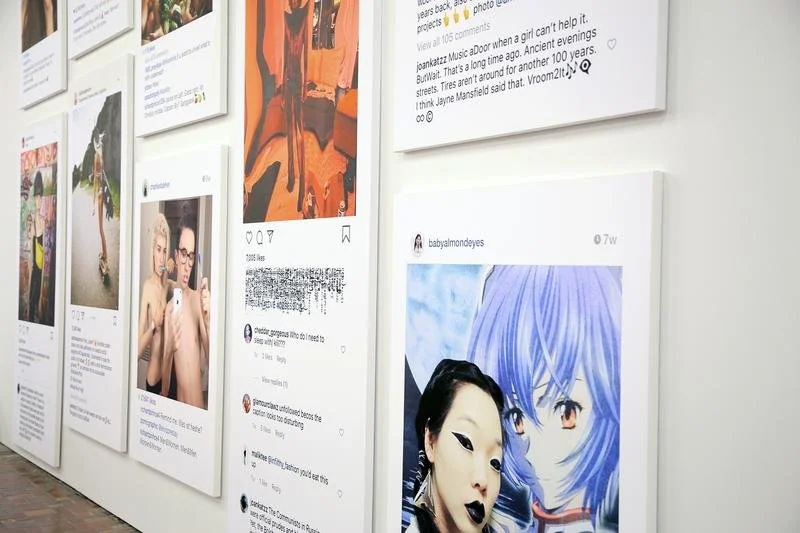
Prince's work doesn't feel authentic on first look. It gets more interesting the longer you sit with why he made it. We're arguably more saturated with images now than the Pictures Generation was in the 1970s, and that saturation shapes us quietly, through suggestion rather than direct statement. The skepticism and irony running through the series is exactly the kind of move postmodernism trades in, and it's part of why the work keeps generating debate over whether it counts as art at all.
If Prince can appropriate a stranger's Instagram post and call it a portrait, a meme built from other people's screenshots isn't a different move. It's the same one, running on a different platform. Memes could be a starting point. That idea shaped my own piece, titled Screenshot 2024-06-06 at 10.35.24 AM_1. I made several versions, experimenting with how a screenshot gets framed and cropped to change the meaning it communicates. I have friends who communicate almost entirely in memes, and a former coworker, a graphic designer, who talked about meme culture constantly. Working through this made me think harder about the language internet images speak, how pop culture trains us to read them, and where the line sits between a screenshot and a photograph. Overall, the process was fun and challenging. I became obsessed with figuring out how many layers deep I could go with this concept and blended instant film with mobile photography, and capping it off with screen capturing the whole thing. I really should print this, but that’s a story for another time.
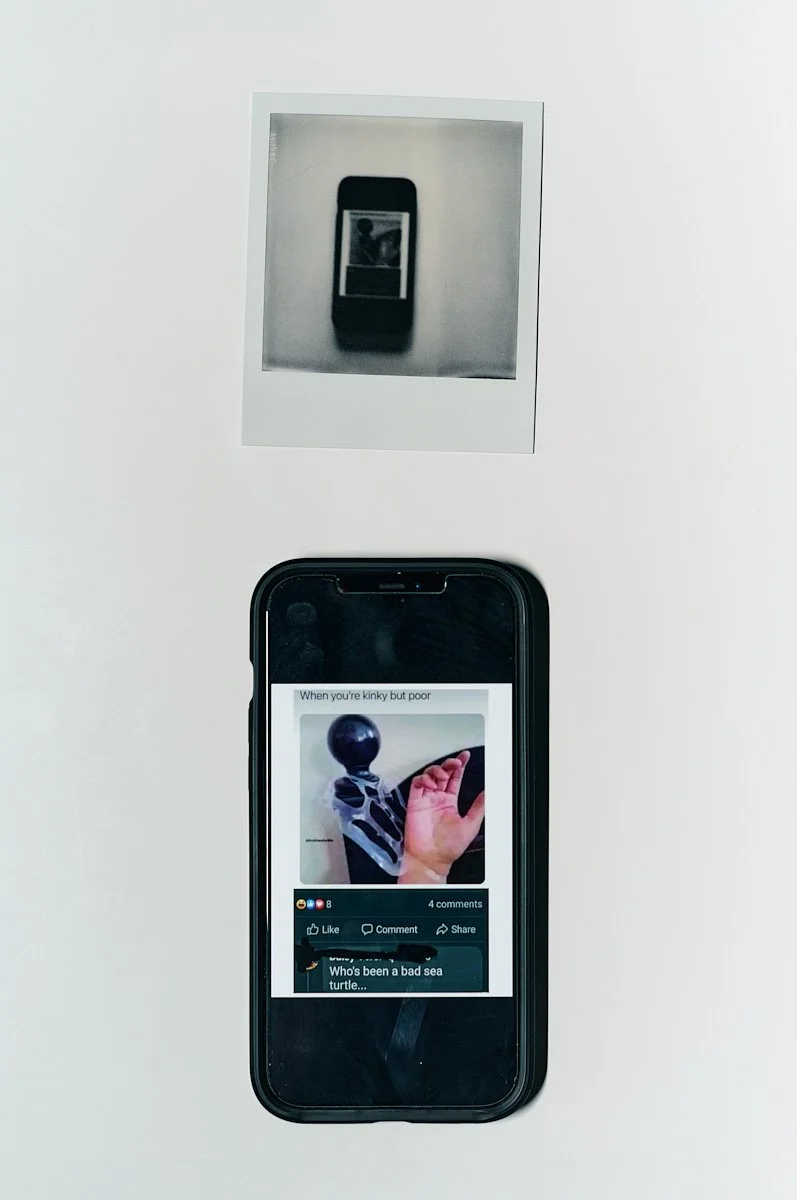
Screenshot 2024-06-06 at 10.35.24 AM_1, 2024.
My first reaction to Prince's approach was dismissive. It felt like the photography equivalent of yelling at kids to get off the lawn. That reaction didn't survive the process of making my own piece. Once I started working through how to actually capture and frame a screenshot, I understood what Prince was doing, and I want to keep pushing on this idea in future work. Maybe that's the postmodern move here too: there's no single truth about what a screenshot is worth as art, only whatever meaning you decide to assign it.
Works Cited
http://www.richardprince.com/exhibitions/portraits/
Tate. Postmodernism. https://www.tate.org.uk/art/art-terms/p/postmodernism
Gagosian. Richard Prince - New Portraits. https://gagosian.com/exhibitions/2020/richard-prince-new-portraits/